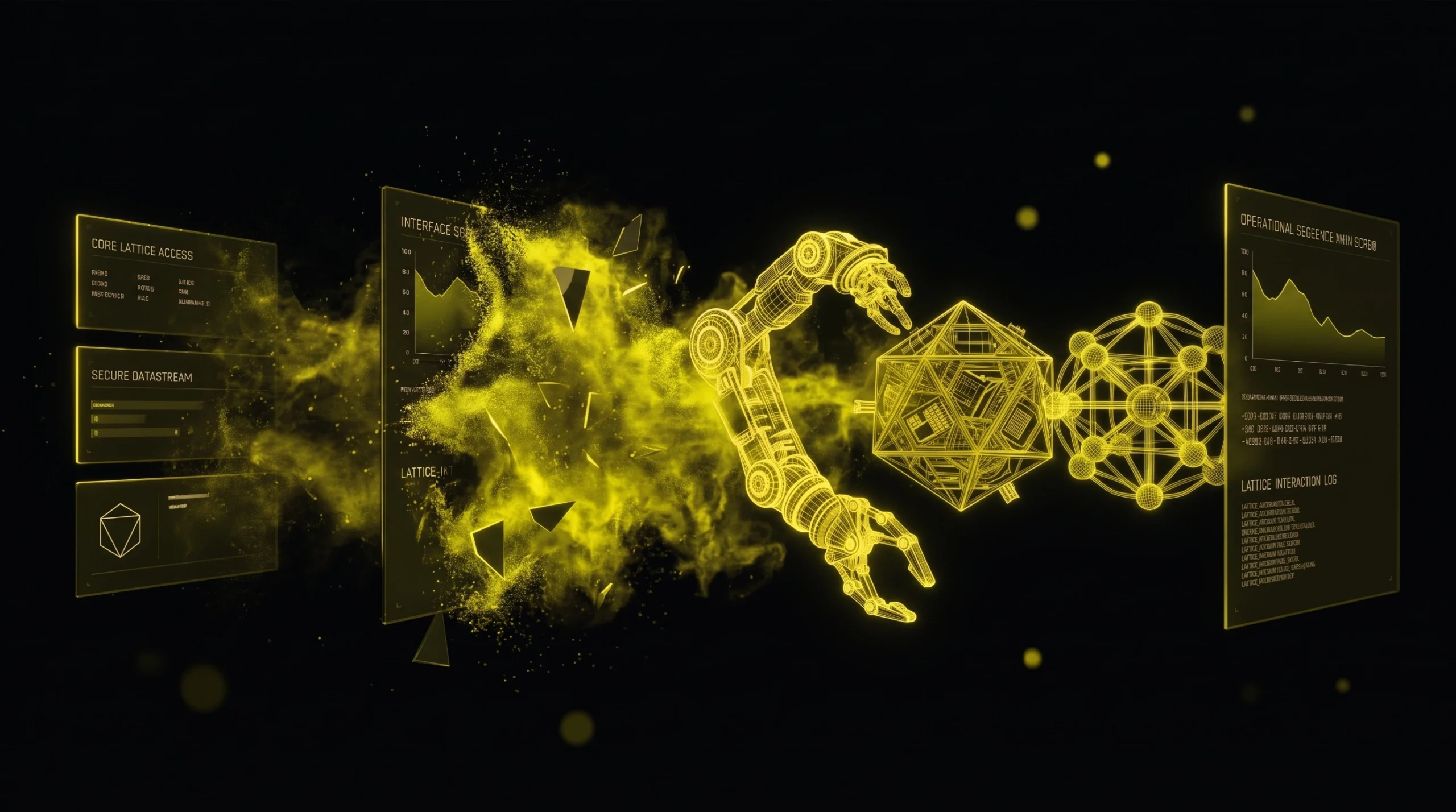
The Death of the Hyper-Specialist Silo
For years, the digital design industry encouraged strict hyper-specialization. UI designers stayed inside screen layout software, 3D artists focused exclusively on mesh topology and texture maps, and developers wrote code in isolation. This division worked well for static web pages and predictable software, but the rapid expansion of real-time 3D media, immersive applications, and spatial computing has exposed its limits.
Modern digital products rarely fit into single visual containers. Interactive media demands experiences where interface elements respond dynamically to 3D lighting, physics, and custom visual shaders. When creators operate strictly within specialized silos, communication breaks down during production, leading to technical debt, compromised visual quality, and friction across teams. The solution is the polymath designer: a professional who builds deep mastery in a core discipline while developing functional fluency across 3D pipelines, front-end code, and spatial interaction design.
The Synergy of Cross-Disciplinary Skill Sets
Becoming a polymath creator does not mean trying to master every single tool on the market equally. It means understanding how underlying technical principles connect across different disciplines so you can make informed, scalable design decisions.
Connecting UI/UX Logic to 3D Workflows
Applying structural UI principles like visual hierarchy, component states, and accessibility to real-time 3D engines like Unity or Unreal Engine radically changes how virtual spaces feel. Understanding 3D fundamentals, such as UV unwrapping, material shaders, camera projection, and lighting optimization, allows designers to craft interfaces that belong inside three-dimensional worlds rather than looking like flat overlays tacked onto a screen.
Code as a Design Tool
Writing code, whether in C#, JavaScript, or custom shader graphs, transforms static mockups into living systems. When a designer understands basic logic structures, state management, and asset performance budgets, they stop designing impossible layouts. Technical literacy enables creators to build responsive prototypes, anticipate edge cases early, and communicate effortlessly with engineering teams during production.
Accelerating Problem-Solving and Technical Intuition
The greatest advantage of cross-disciplinary learning is the development of technical intuition. Learning concepts outside your immediate comfort zone rewires how you approach complex design challenges:
-
Empathy for Production Pipelines: Understanding front-end code and engine rendering limits helps designers create clean, modular Figma assets that translate efficiently into production builds.
-
Rapid Prototyping Autonomy: A polymath designer does not need to wait for a developer to test an interactive concept. They can build low-fidelity interactive prototypes themselves, test micro-interactions in real time, and validate mechanics before committing heavy resources.
-
Resilient Technical Troubleshooting: When an asset breaks, a texture fails to render, or an interface lag occurs, cross-disciplinary knowledge allows designers to trace the root cause across software boundaries instead of hitting a wall.
Shaping the Future of Digital Entertainment
The future of digital entertainment belongs to those who bridge creative vision and technical implementation. As interactive mediums continue to merge, the demand for versatile creators who understand the end-to-end pipeline will only increase.
By cultivating a polymath mindset, combining the structural discipline of UI/UX design with real-time 3D pipelines and fundamental programming logic, creators unlock true autogenous output. Embracing cross-disciplinary learning turns technical complexity into a creative catalyst, allowing designers to build richer, more immersive, and deeply engaging digital experiences.
Do not go yet…
Check out my other posts!
Spatial UI: The Evolution of Digital Layouts


Heritage in Motion: Revitalizing Traditions Through Technology